
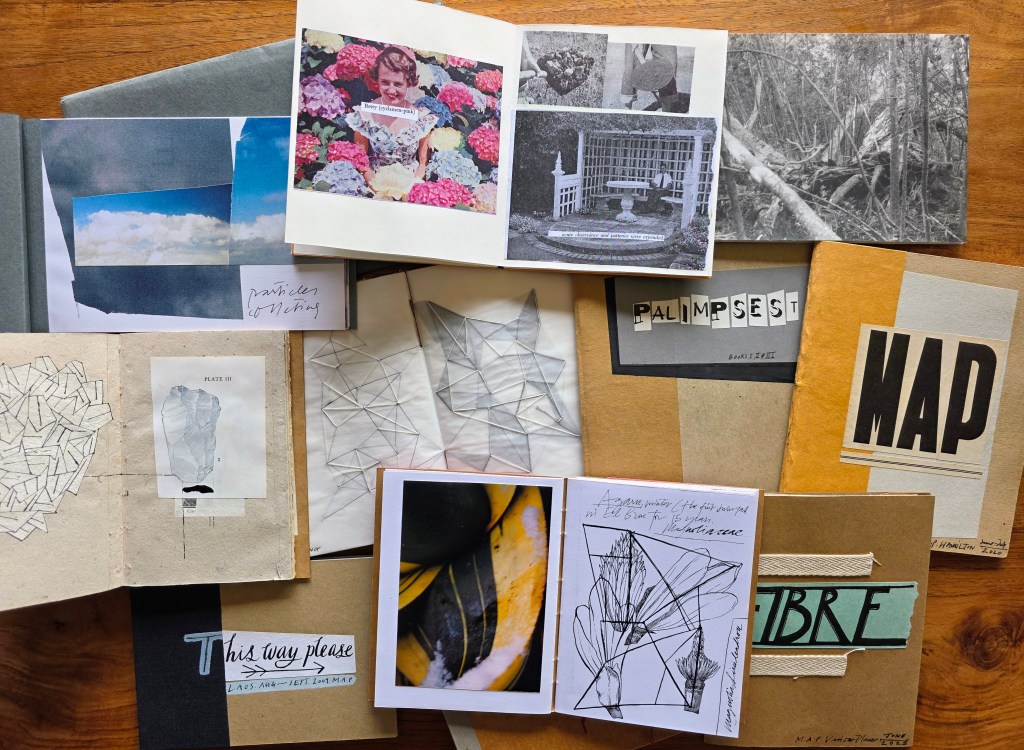
This short post has been written to help you (and me!) navigate the growing field of artist’s books. It provides an overview of what sets artist’s books apart from their mass-produced cousins. Artist’s books are a genre of book that stretches across many different dimensions: from the casually and quickly constructed to the technical marvel; from one-offs to multiples, from works that look like books to others merging into sculpture. Raw materials associated with books – paper, card, leather, thread, cloth, metal (historically used e.g., for clasps) are intriguingly reworked taking the idea of the book into new places, complemented by a whole suite of new materials and processes. Generally, there is one common thread – artist’s books are handmade… mostly.
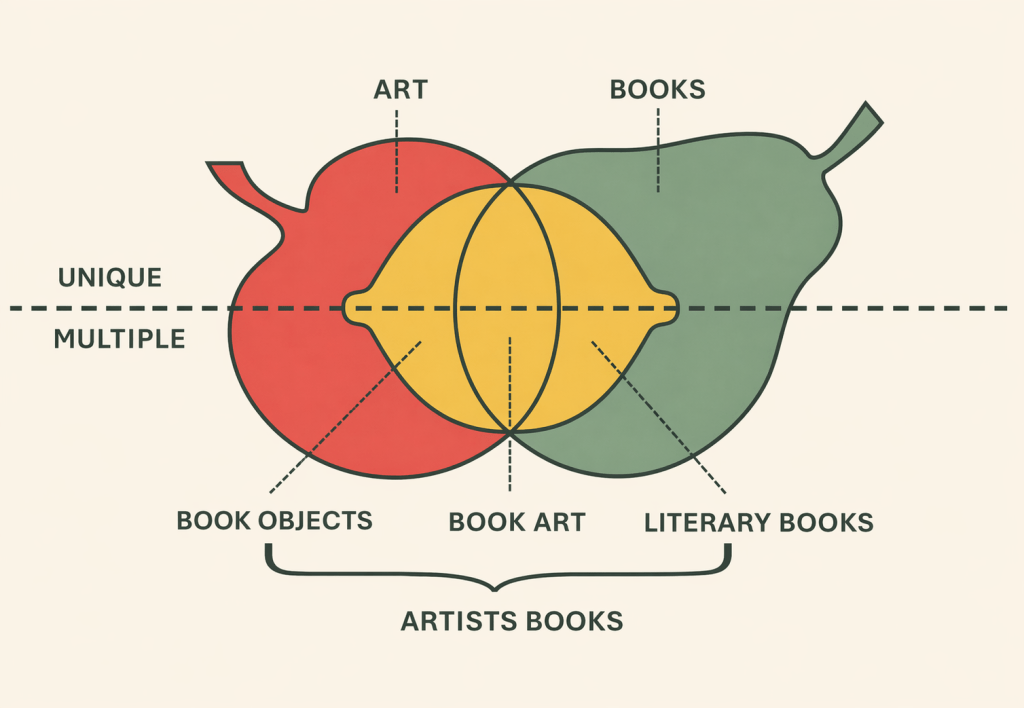
Last year’s Bind25 symposium (covered in the previous post) was a great introduction to the sheer breadth of book arts, prompting me to delve further into the scope of artist’s books. To show were artist’s books sit between artworks and commercially made books, Clive Phillpot, essayist and artist-creator developed a “fruit salad”-themed Venn diagram (1982):
But what exactly are Artist’s books? Several important texts have helped shape a more critical analysis of the genre, each author providing their own definition – from prosaic and practical to broad and playful:
Stephen Bury: “books or book-like objects, over the final appearance of which an artist has had a high degree of control; where the book is intended as a work of art in itself” (Artists’ books: The book as a work of art, 1963–1995)
Joanna Drucker: “Artists’ books are books created as original works of art, rather than as reproductions of pre-existing works… [they] integrate the formal means of their realization and production with their thematic or aesthetic issues” (The century of artists’ books)
Ulises Carrión opened a space in Amsterdam in 1975 specializing in artists’ books and multiples describing them as “non books, anti-books, pseudo books, quasi books, concrete books, visual books, conceptual books, structural books, project books, statement books, instruction books” (The new art of making books)
Artist’s books
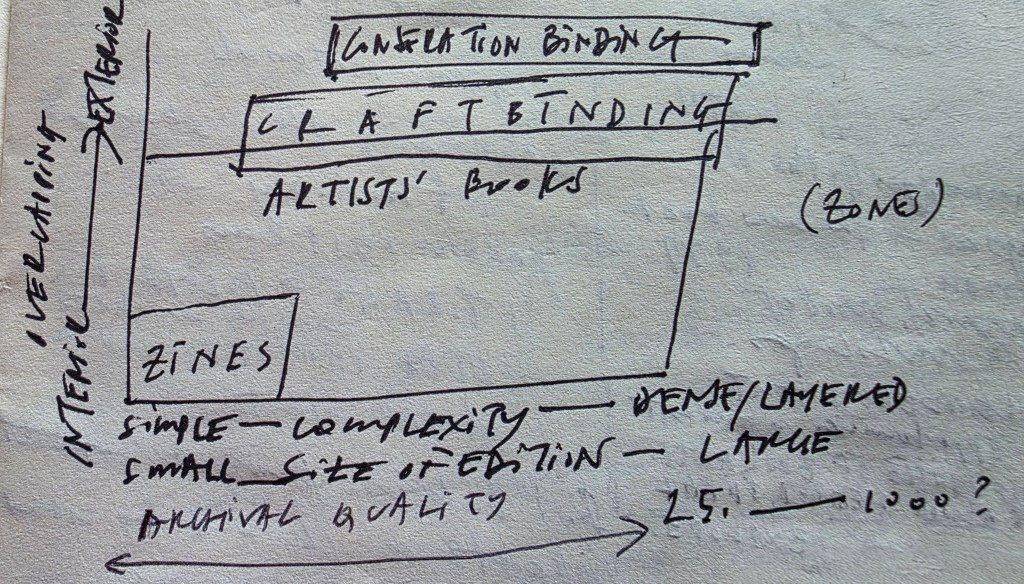
The diversity of expression creates challenges for categorisation beyond a few simple dimensions and sub-genres. However, the following paragraphs offer a few insights.
Narrative content: books are traditionally read in a linear sequence, but artist’s books may disrupt or expand this idea. A story might unfold through fragments, sequences of images, or by opening folds, cut-outs, or though layered materials. Both Drucker and Phillpot emphasise that meaning emerges not just from text or image, but from the way the reader engages with work itself. Books by nature are tactile, sensory experiences.
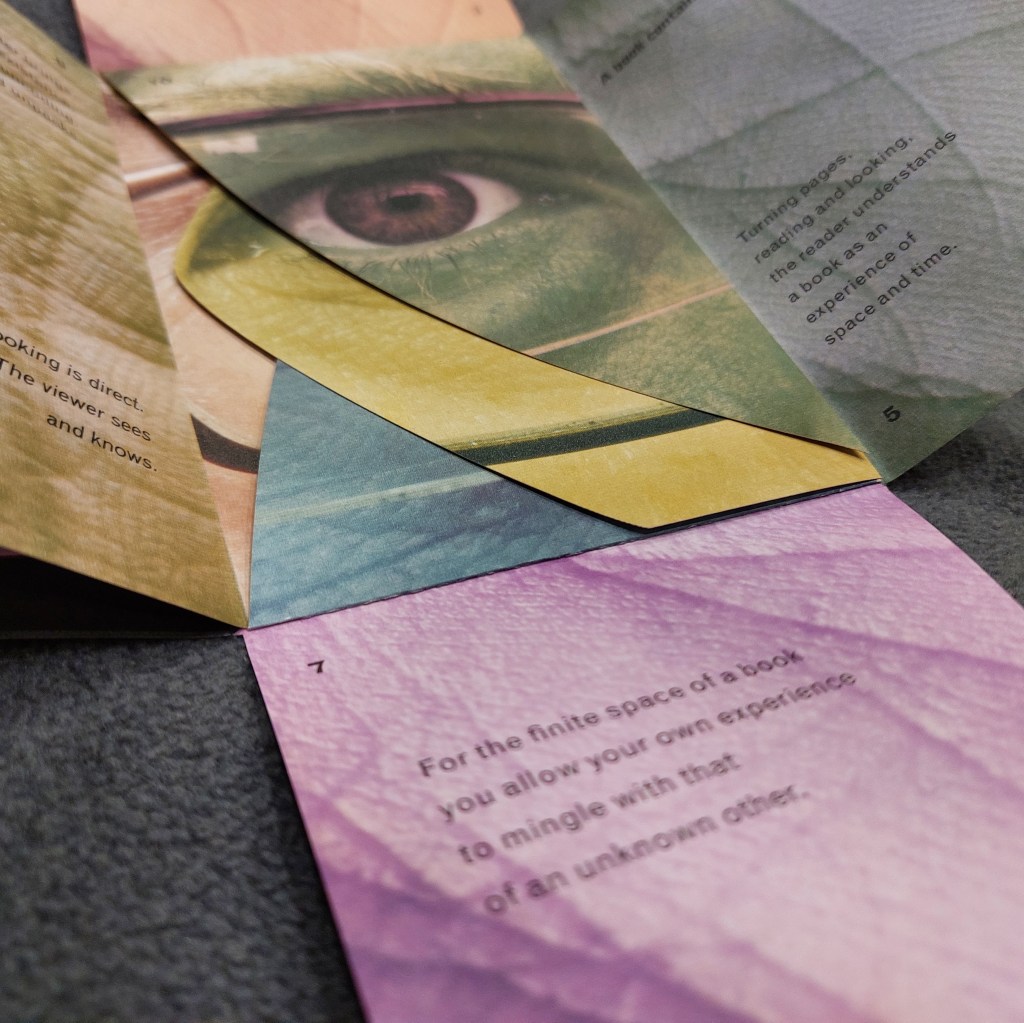
Format: While some are formatted as traditional books (my personal work sits firmly at this end of the spectrum), others expanding the idea of the book by becoming sculptural objects. New works may be created from existing books, for example, subverting the original content to create new meaning, using the book as a building block for sculpture or making a book where the idea of “reading” is challenged.
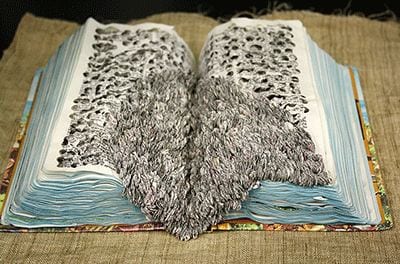
Edition size: Some are one-off, entirely handmade works, while others are produced in small editions through collaborative processes such as letterpress printing and hand binding. These finely crafted books often sit at the high-value end of the spectrum, reflecting significant technical skill and time. However, artist’s books can also be produced in larger editions using commercial printing, making them more accessible while retaining artistic intent—an idea explored in The Artist’s Book by Stephen Bury.
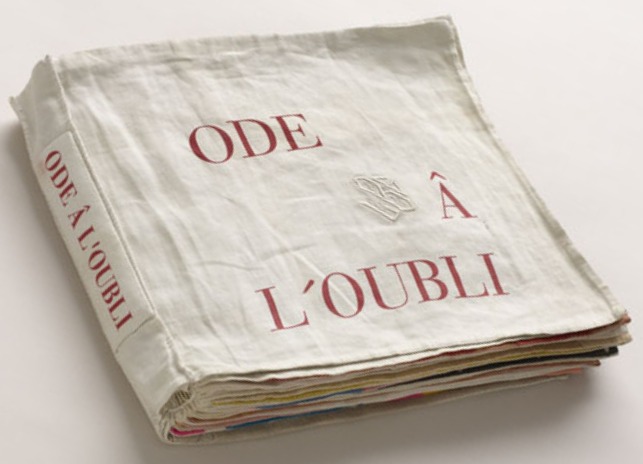
Materials: These choices play a vital role in how a book communicates – from plain xerox paper, folded or stapled emphasising casual immediacy to archival-quality papers and bindings designed to be treasured for many years. In his essay The New Art of Making Books, Ulises Carrión notes that a book is not just a container for text; its structure, sequence, and form are inseparable from the meaning of the work itself.
Photobooks
Photobooks offer a powerful example of narrative through sequencing. As explored by Martin Parr and Gerry Badger in The Photobook: A History, the arrangement of images creates rhythm and meaning, with the book format itself shaping how the story is understood. The emotional tone of the book is reinforced e.g., through the tactile qualities of paper, the grain and tone and nature of imagery and the scale of the work.
Zines
Often self-published, low-cost, and produced quickly, many zines prioritise immediacy over polish. Some are folded single sheets or multi-page booklets, photocopied and distributed e.g., through zine fests. As such they are dynamic and democratize craft-making by lowering the bar for participation
Zines… allow your imagination to run wild! Full of comics, collage, fan-art, photo essays and more, Zines draw inspiration from anywhere and everywhere.
Where can I see artist’s books, photobooks and zines?
In Tamaki Makaurau/Auckland, public collections include the Angela Morton Collection of the Takapuna Public Library and the Special Collections at the University of Auckland Library. At the central library, Rare Books include collections of Private Press works from New Zealand based hand printers, binders and book artists though not single edition artist’s books or books as sculpture. Illustrated photobooks are also collected, focusing on those recently published in Aotearoa by small independent presses. The National Library of New Zealand in Te Whanganui-a-Tara/Wellington houses artist’s books with a focus on Aotearoa practitioners.
Kirikiriroa/Hamilton central library holds an intriguing collection of zines while Zine fests abound in the major centres with creative opportunities included in annual events such as Printopia in Tamaki Makaurau.
International Collections
The Victoria and Albert Museum National Art Library offers one of the most comprehensive collections, spanning historic to contemporary works, while New York’s Museum of Modern Art Library & Archives and Printed Matter, Inc. provide deep dives into artist’s books, zines, and experimental publishing. Upstate, organisations like the Women’s Studio Workshop champion feminist and experimental approaches through dedicated collections. On the US West Coast, both the San Francisco Museum of Modern Art Library and UCLA Library Special Collections hold strong collections of contemporary and avant-garde works. In Europe, institutions like the Bibliothèque Nationale de France, Staatsbibliothek zu Berlin, and the Rijksmuseum Research Library house significant collections of livres d’artistes and experimental book forms. Closer to home, the State Library of Victoria and Art Gallery of New South Wales Library connect artist’s books to regional practice and exhibitions.
REFERENCES
Bury, S. (1995). Artists’ books: The book as a work of art, 1963–1995. Ashgate Publishing.
Carrión, U. (1975). The new art of making books.
https://thereader.mitpress.mit.edu/the-new-art-of-making-books-on-bookworks/
Drucker, J. (2004). The century of artists’ books (2nd ed.). Granary Books.
https://monoskop.org/images/9/9c/Drucker_Johanna_The_Century_of_Artists_Books_1995.pdf
Duncombe, S. (2017). Notes from underground: Zines and the politics of alternative culture (2nd ed.). Microcosm Publishing.
https://microcosmpublishing.com/catalog/books/5456
Parr, M., & Badger, G. (2004). The photobook: A history, Volume I. Phaidon Press.
https://www.phaidon.com/store/photography/the-photobook-a-history-volume-i-9780714842854/
Parr, M., & Badger, G. (2006). The photobook: A history (Vol. 2). London, UK: Phaidon Press.
Parr, M., & Badger, G. (2014). The photobook: A history (Vol. 3). London, UK: Phaidon Press.
Phillpot, C. (1998). Bookworks: Essays.
https://monoskop.org/Clive_Phillpot

