
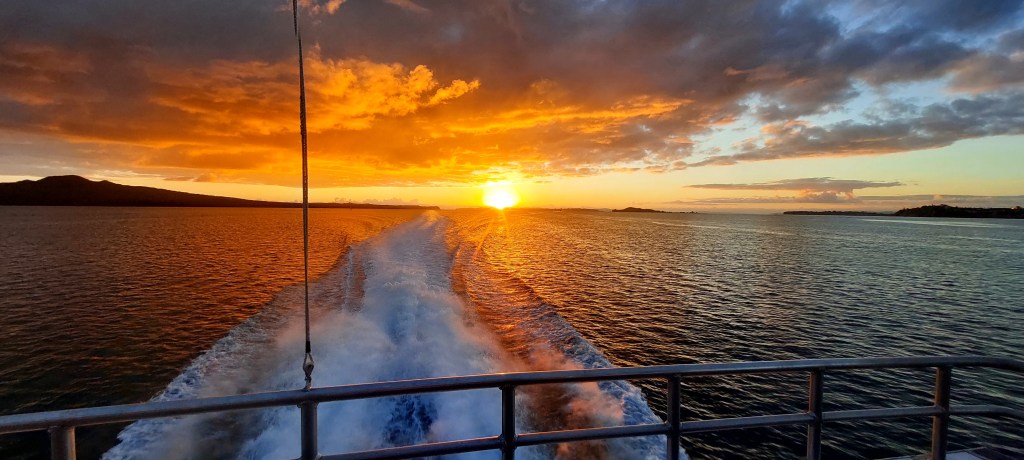
expansive views across the Hauraki Gulf
Some years ago in Ōtautahi, Christchurch, I had the joy of attending my first oral history conference. I was taken by a friend I’d met while volunteering on the remote Rangitāhua Raoul Island, a dot in the Kermadec Archipelago. It was an incredible conference, unlike any I’d been to before. The presentations were poignant, humorous at times, intensely thought- provoking and very, very inspiring. I filed many of them away and was promptly sidetracked by academic and assorted contract work, and life. By good fortune, I reconnected with the Oral History Association of NZ, Te Kete Kōrero-a-waha o te Motu, at a conference in Tāmaki Makaurau (Nov 15-17, 2024). This post and the next both chart a journey through the diverse presentations and draw out some of the themes variously presented, pondered, discussed and debated.
Before the conference formally opened with a keynote delivered by representatives from Ngāti Whātua Ōrākei, two highly informative workshops offered practical insights into the planning, the doing and the business of impactful oral history projects… tasters for in-depth workshops run through NOHANZ. The workshops underscored that oral history interviews are more than just harnessing source material, they’re taonga protected and preserved to inform ourselves and others, connect families, communities and cultures, and to build histories from.
Opening conversations: “material culture”
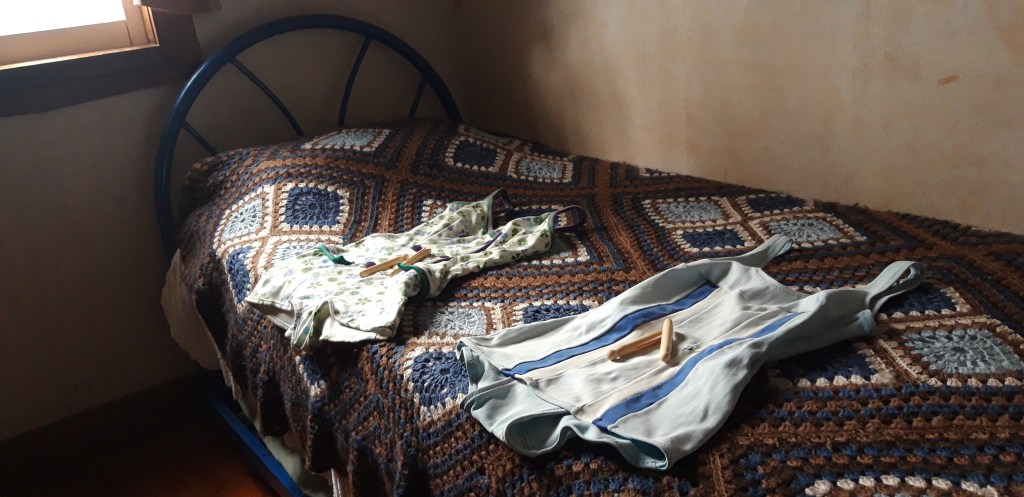
Day one opened with “In My Room” a collaboration between veteran Oral Historians Helen Frizzell, Megan Hutching and Pip Oldham. Personal items selected by interviewees provided a literal touchpoint for evoking memories and sharing personal narratives. The approach enabled a more nuanced exploration of individual histories, and sometimes unexpected insights were revealed: For one interviewee, a cupboard door was significant, a physical and metaphorical portal to piles of documents evidencing their working life.
The process of doing: illuminating culturally grounded research methodologies
Ways of conducting culturally sensitive oral history were explored through many presentations. Art history PhD candidate Mikayla Journee and social activist Grayson Goffe co-created an approach for their research collaboration. Their discussion on the where from, why and how was captured visually, literally mapping out how whakapapa and tikanga would shape the way information was collected and shared. Although many frameworks already exist (see Linda Tuhiwai Smith) building a research kaupapa is ongoing and situational – it’s not one-size fit all, rather a negotiation between interviewer, commissioning bodies and interviewees.
To research whānau memories of Kawiti’s War (Northland, 1845-6), a wananga methodology was developed to guide interviews and interactions with whānau members. This centred on “intergenerationality” rather than strict chronologies with me mahi tika (truth, correctness, fairness), me mahi pono (true, honest, genuine, sincere) – as guiding principles for the project. Emma-Jean Kelly while project managing the development of the “te Rauparaha: Kei Wareware Lest We Forget” podcast, urged that during interviews, oral historians should: “Pay attention to silence. Give it a capital is, don’t assume it is agreement. Often it is the opposite”.
In some cases, how institutional ethics procedures can hinder research with indigenous communities. Skye Krichauff, based at an Australian University highlighted how academic documents can lack sensitivity to different cultural settings and how changes to document wording can take a very, very long time.
Interviewing from the inside: “Storying our people”
Many of the presenters described research with members of their own communities variously describing the process as strengthening their personal connections while providing an enduring record for their community members. Natalie Looyer, a keen rock climber and PhD candidate sought to reassess tensions reported in the archival material between rock climbers and mountaineers with first-hand oral histories. Deborah Shepherd and Sue Gee, both Karekare residents gathered community recollections of the 2023 cyclone that devastated parts of the settlement. Stephanie Tibble reflected on her own connection to the historically significant St Joseph’s Māori Girls College, while collecting oral histories of leading figures for the school’s 150-year celebrations.
However, insider research does raise questions. A group of Pasifika researchers from Ōtepoti / Dunedin interviewing their own local Cook Island community were queried by an audience member on how bias and impartiality were addressed. Their response emphasized that subjectivity is central, with interviews following a dialogical process (where relationship building centres on mutual engagement, understanding, and transformation). Community members themselves selected who should be interviewed – “insider to insider” as it were.
Interviewer responsibilities: navigating tricky terrain
While oral history codes of practice and oral history scholars acknowledge a range of legal and ethical issues that can arise while interviewing, the focus tends to be more on whether to erase or withdraw defamatory material, rather than to instill a sense of how to navigate potentially defamatory terrain that might arise in the course of an interview – L. Zion, A. Dodd & M. Ricketson
Caroline Collins talked about limiting the collateral damage “ticking truth bombs” from interviews. She questioned whether ultimately, she had been manipulated by the interviewee, the latter well aware that their disclosures would cause substantial future harm to others (though embargoed until the interviewee’s death). Discussion during the presentation highlighted that for oral history, the truth and memory of the interviewee are privileged over others not interviewed – they remain silent. While journalists provide a “right of reply” where a third party is mentioned in a potentially defamatory context, oral historians do not have this obligation. However, several audience members described how occasionally they had stopped recording, reminding interviewees that the information they shared could sit in the public domain for 100 years… or more.
The next post – NOHANZ Part 2, covers Māori data sovereignty, dealing with grief and trauma in interviews and oral historians supporting each other.
A handful of the many resources mentioned:
Zion, L., Dodd, A., & Ricketson, M. (2020). Recording lives in journalism: Reflections on oral history and journalism methods in life histories. Studies in Oral History: The Journal of Oral History Australia, (42), 56-80.
Ellis, W. (2021). Nina Simone’s Gum: A Memoir of Things Lost and Found. Faber & Faber.
The Dominion Road Project (2012-2013): Interviews with residents, shopkeepers and visitors to Auckland’s iconic Dominion Road on the shifting landscape of the Road: changes in transportation, retail shopping, entertainment and the activities people enjoy for leisure.
Wiesner, A. (2021). The Dialogic Process, Relational Approach, and Transformative Aspect of Interviewing. The Oral History Review, 48(1), 100–115. https://doi.org/10.1080/00940798.2021.1894076
 monicalogues
Pingback: KŌRERO MAI, KŌRERO ATU: Exploring oral history at the NOHANZ conference (Part 2) | monicalogues·