
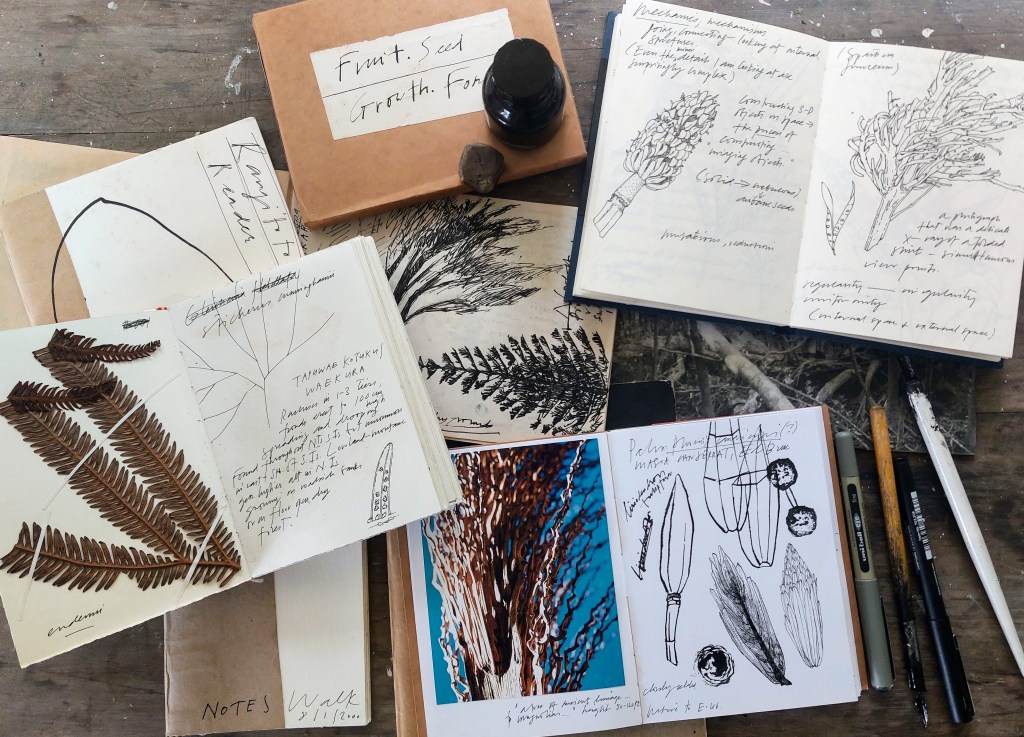
The handmade books I’m interested in are generally built with what’s at hand – far from exquisitely bound Victorian tomes with gold lettering and elaborately marbled end papers. But why make a book? Because they’re more than just a repository for ideas and objects, they’re a way to connect with the present and our surroundings. In this post, I explore handmade books as a warm-up to a Nature Journal Making workshop I’ll be running with fellow artist, author, healer and book-lover, Leila Lees in late 2025.
In a world saturated with throwaway digital content delivered at lightning pace, making a simple book by hand invites us to slow down. There’s something deeply satisfying about working paper into a multipage object, rendering paper from 2D to 3D when opened and back to 2D when closed.
The craft of the handmade book: Using simple materials and techniques
You don’t need a lot of materials to make a book by hand. Card. Paper. Needle and thread, ruler and pencil, glue and creativity. Instead of a book press, something heavy (like other books) will stop glued components from buckling. Incorporating recycled materials defines the book as your own – each book can be a one-off. A shift occurred in my book-making practice decades ago, when I saw how roughly Anselm Kiefer had made his works – they revealed exactly how each was made. So, tidy and precise? Or not? This is both an aesthetic and functional choice – what will the book be used for?
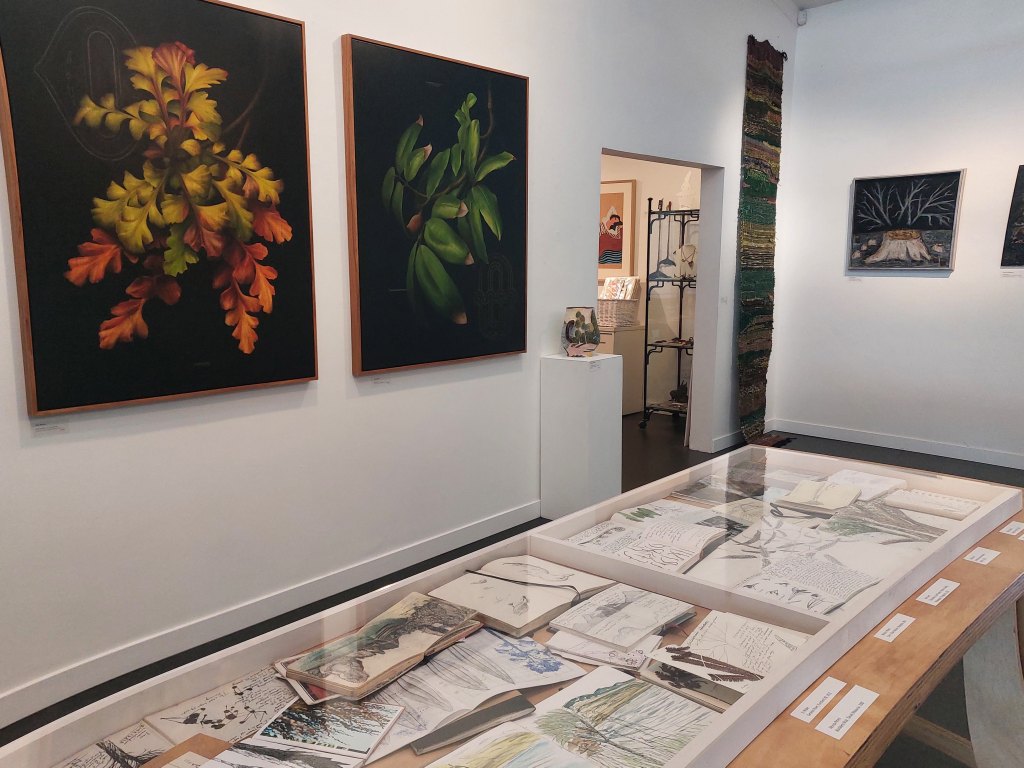
Nature Journaling workshops: Waiheke Island 2025
Leila and I co-designed a workshop series on Waiheke Island, exploring different ecosystems through nature journaling. Instead of being part of the conservation-themed Understory exhibition, the three workshops became four, then six thematically linked events with other leaders joining in: artist and marine advocate SJ Blake, author and strategist Annette Lees, and biologist Shane Wright. Combined, these six workshops span night and day, landscapes and details, yet all focus on connecting to place. So, Leila and I thought, why not invite participants to MAKE their own nature journal to bring along? Teaming up with Waiheke Adult Learning, participants in the first workshop will learn about different book styles and binding techniques. They’ll come away with one or two handmade books and protective envelopes to begin nature journaling.
“Journals, with their observations of the natural world we inhabit, are as much about the
– Leila Lees
observer as what is observed. So often they are a reference point for artwork and are a core practice of the research… that reflects the unfolding curiosity of the artist. This is the heart of natural history observation and a creative process”.
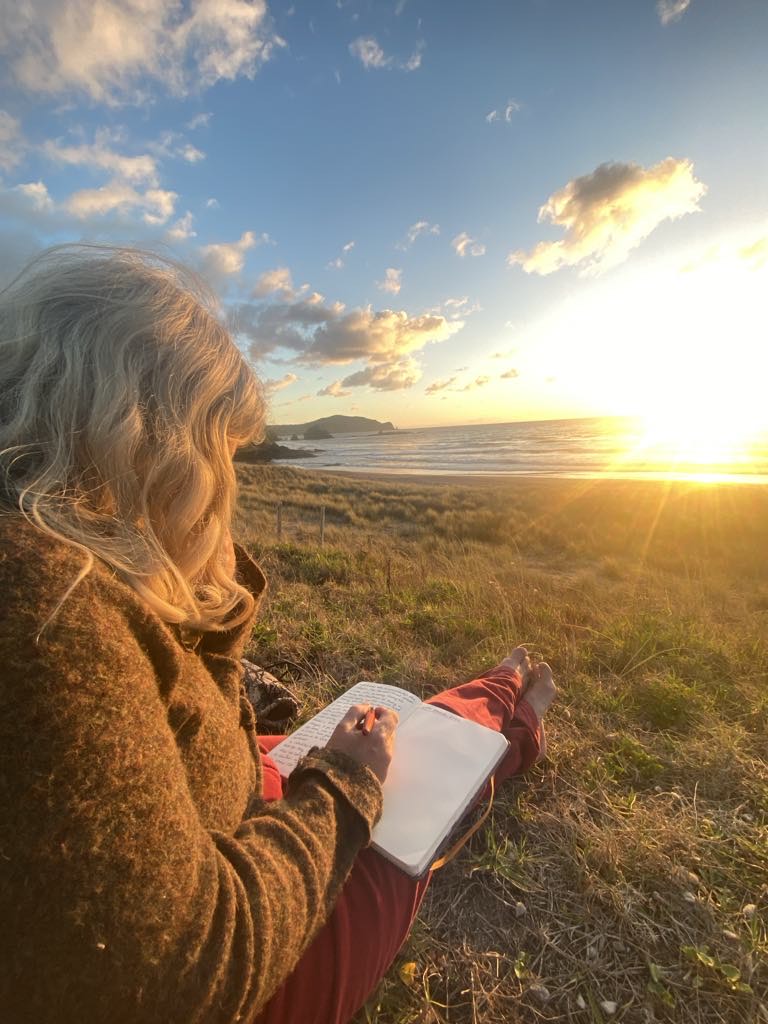
Nature Journaling: Observing and recording the natural world
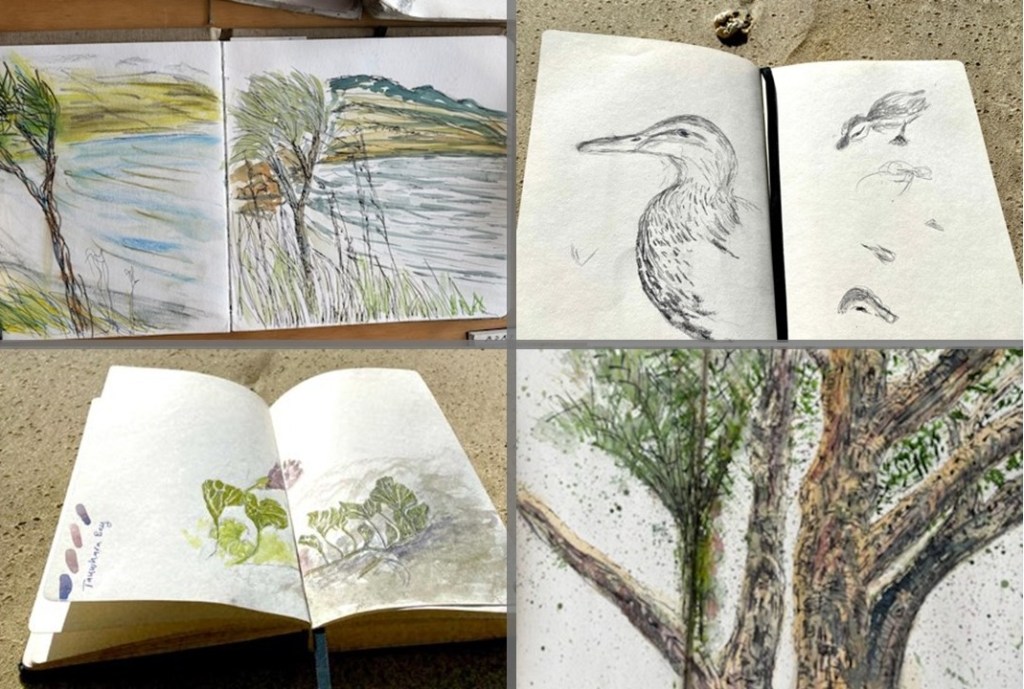
Simply put, a nature journal is a personal record of outdoor observations, blending sketches, notes, and collected specimens. It’s an activity that encourages slowing down, looking closely, and mindfully engaging with the natural world. The process nurtures curiosity, creativity and appreciation through pen, ink, watercolour, pencil and materials from nature: pigments, plant matter, feathers, sand. Macro or micro, journaling is an exploration of the moment and of place.
 monicalogues