
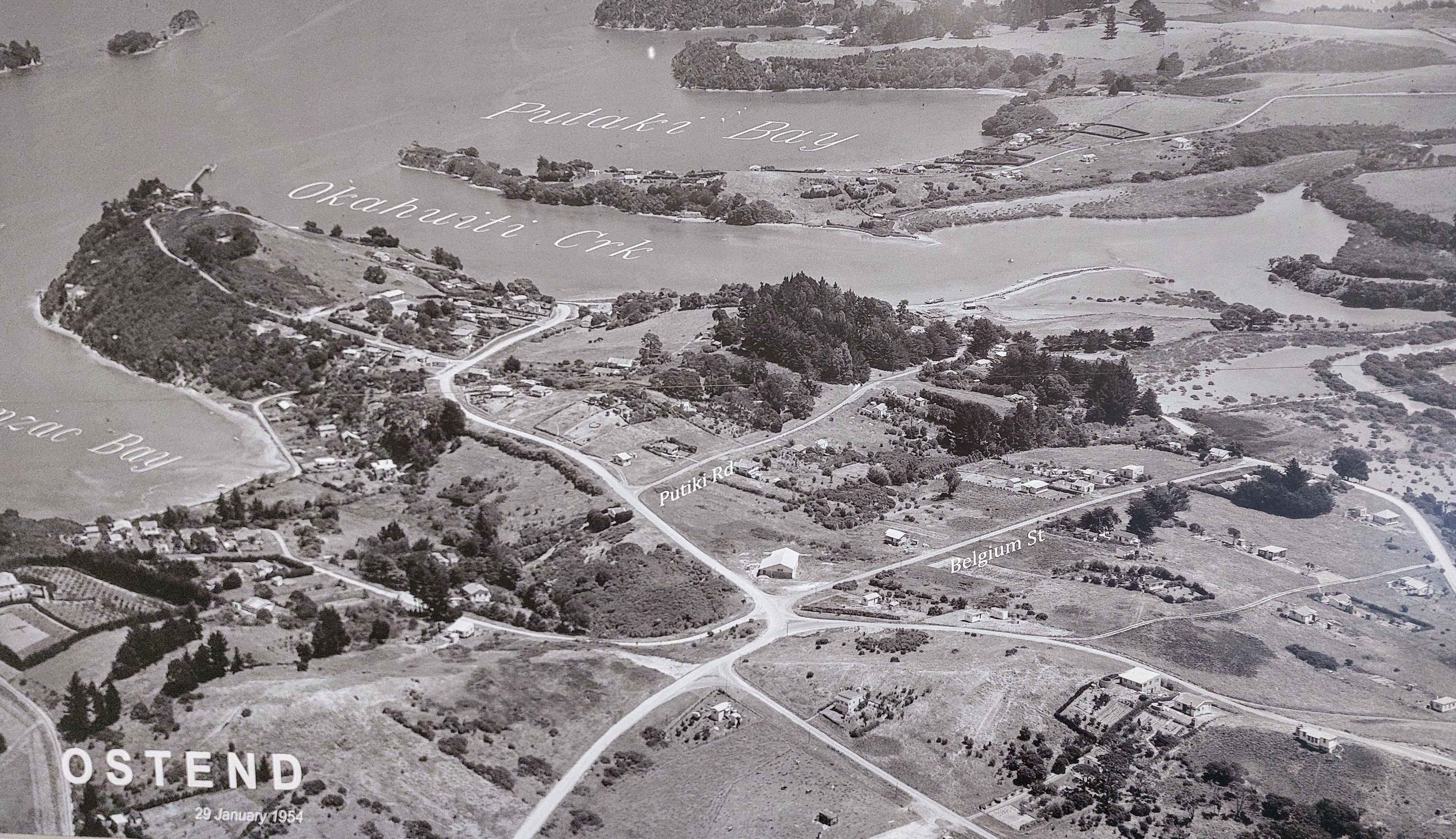
Mid-century images of Waiheke Island Te Motu-arai-roa show a stark landscape of grass-covered slopes and scattered matchbox houses. Macrocarpas are solid dark splotches while native forest remnants are murky textured greys with ragged edges. But we know from early botanical writings (Kirk, 1879) that much of the 92km2 island, like others in the Tīkapa Moana Hauraki Gulf Marine Park, once had “luxuriant” forests covering the raw clay soils.
The Understory Project
While working for a conservation trust on Waiheke, the idea of an exhibition celebrating the recloaking of Waiheke with native vegetation germinated. Plenty of creatives call the island home: poets, sculptors, jewellers, painters and artists defying easy categorisation. For many, the natural environment forms the foundation of their work.
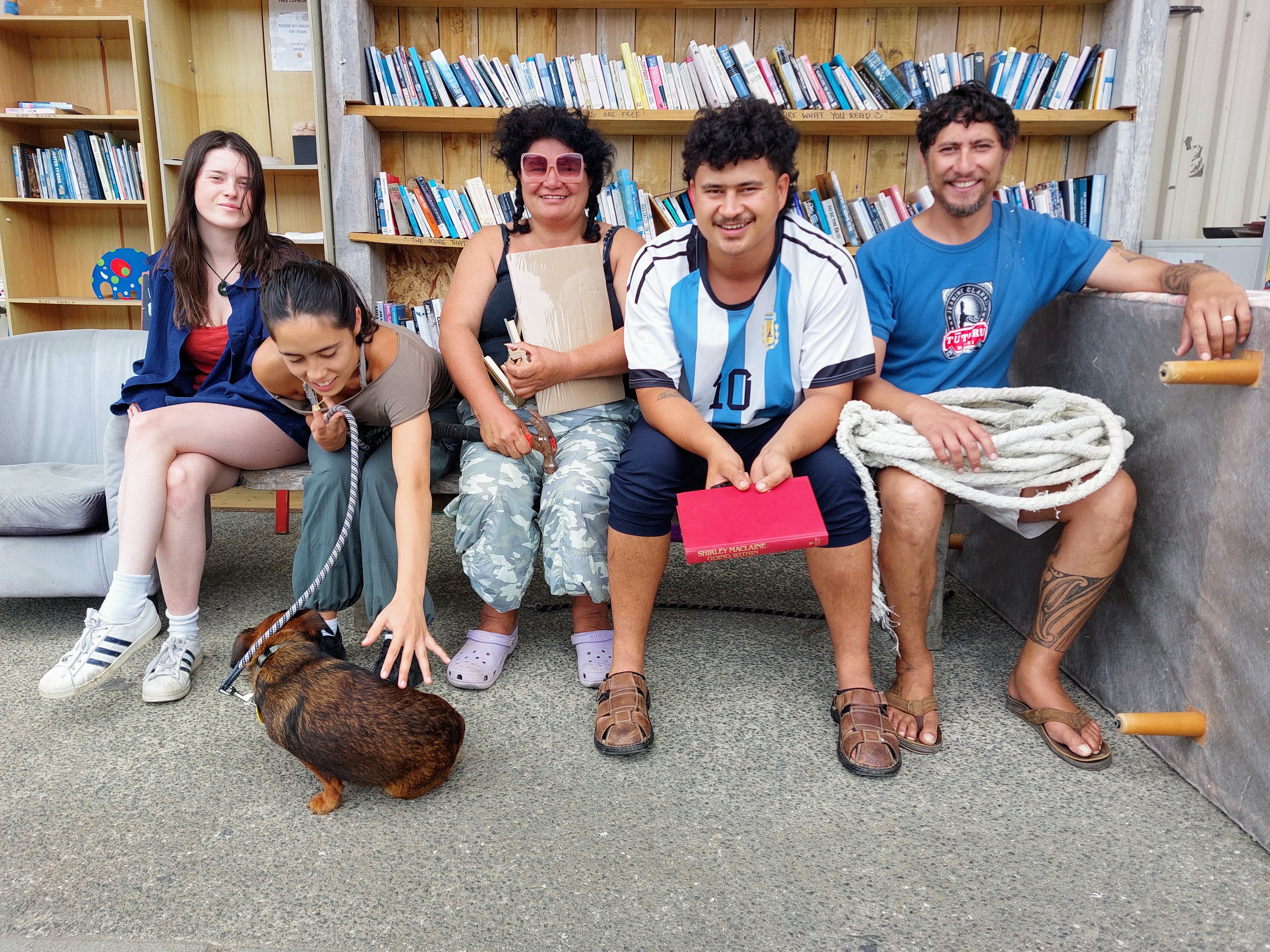
With community engagement as a goal, a collaboration with Waiheke fashion designer and kaitiaki Jeanine Clarkin grew. Two workshops took shape, the first (Jan 2025) designed to mentor budding and upcoming rangitahi creatives to develop a rakau tree-inspired work and the second for the public to explore a restored forest and create works on paper in response. When the Understory exhibition launches in March, Te Waonui a Tāne, the great forest, will spread across the Waiheke Community Art Gallery floor, complementing the many wall-based works investigating the environmental history of the island.
The nuts and bolts of ecological restoration
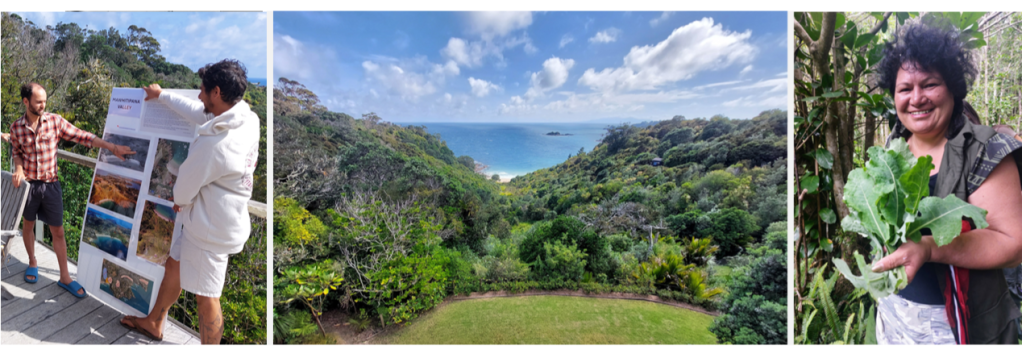
Four rangitahi joined the day-long workshop starting with a visit to the Mawhitipana Project on the north side of the island, to learn about hands-on ecological restoration. It’s no mean feat to restore forest on depleted island soils. Paul Dyson with family and volunteers have shown that 12 years of vanquishing weeds and planting 15,000 natives (and counting) can turn a valley of rank grass and pest plants into forest. Others nearby are doing the same so that a network of valleys now provides habitat for native manu – 33 species feed, nest and fly over Mawhitipana. And the mahi is ongoing – the next generations will need to continue building on the gains made.
Understanding creative practices
Two studio visits followed, showing participants spaces where ideas are shaped into artworks and displayed. Oliver Stretton-Pow, sculptor and co-founder of Studio ten18 provided an overview of the newly established gallery and current exhibition. Wai ora showcases a spectrum of works by tangata whenua, from emerging talent to well-known artists working in diverse media. At the studio across the road, participants were given an in-depth narrative about the creative process from jeweler-sculptor Paora Toi-Te-Rangiuaia. He described working with clients and on commissions, and the slow journey of letting ideas emerge and form through deep listening, learning from the materials and trusting instinct.
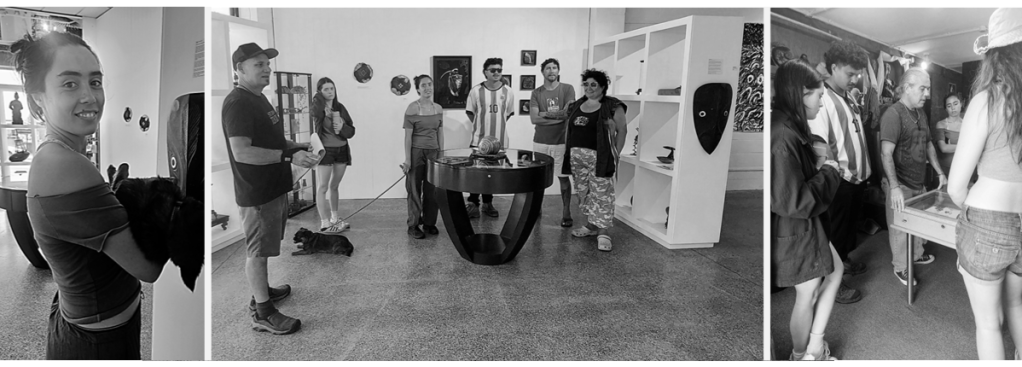
Wrapping up with a bit of fossicking
After kai generously prepared by Jeanine, each participant reflected on ideas and insights the day had already sparked. The Waiheke Community Resource Recovery Park was the final stop. Here, unwanted items are disposed of, generating a treasure trove of transient goods for frugal locals and creative souls alike. Foraging around the various piles of natural and man-made detritus, several “treasures” purchased…
Mid-March is the deadline for works submitted to the Understory exhibition and Te Wao Nui o Tane installation. It’s a scant two months away. Jeanine and I look immensely forward to seeing how the day inspired participants, how they interpret the idea of rakau and whether we might see those fossicked treasures morphed into part of the narrative…
Further reading
Kirk, T. 1879: Notes on the Botany of Waiheke, Rangitoto, and other Islands in the Hauraki Gulf. Transactions of the New Zealand Institute 11: 444–454
Many thanks to Sky City Community Trust for funding the two rangitahi workshops.
 monicalogues