
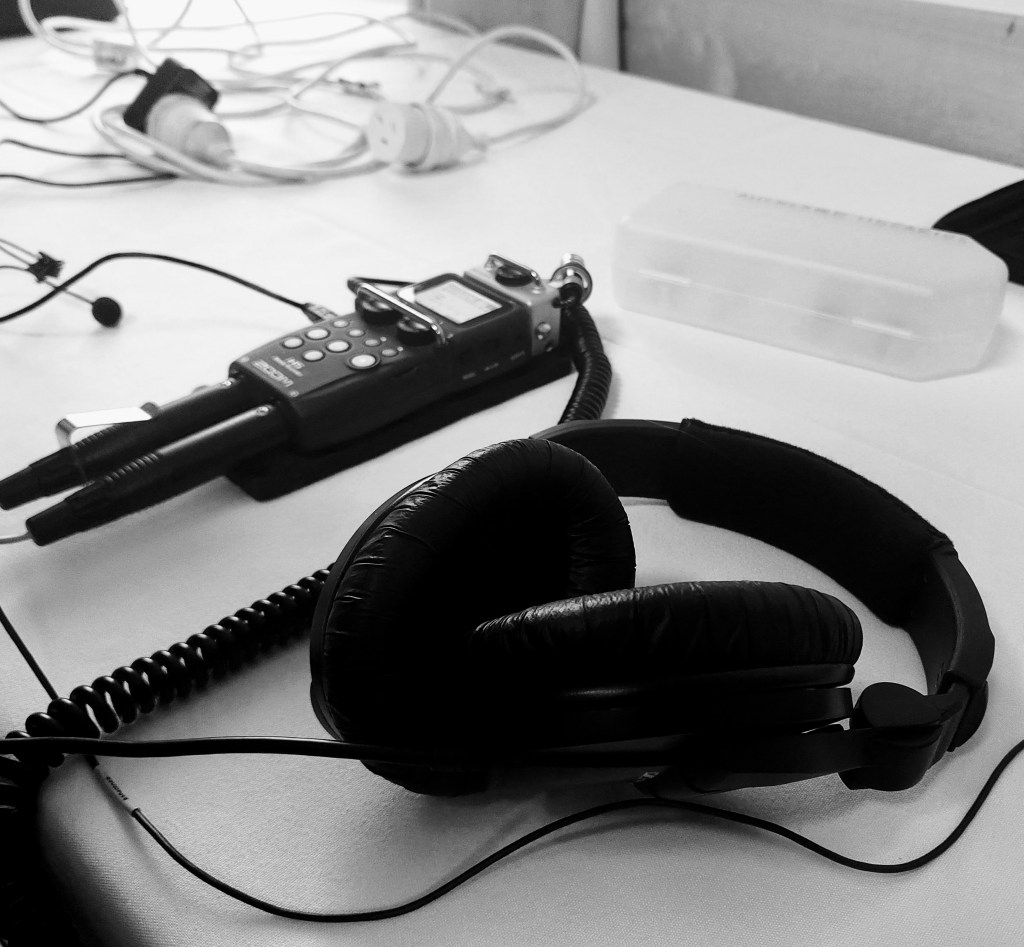
This blog post continues a zig-zag course through a handful of the many topics traversed in the biennial Oral History Association of NZ Conference (Nov 15-17, Parnell, Tāmaki Makaurau). As with any conference that has concurrent sessions, tough choices need to be made… so not all presentations were attended (and covered in these two posts). Topics in the previous blog post include interviewer responsibilities; co-creating culturally grounded research methods; “storying” your own community, and the role of “material culture” in building interviewees’ personal narratives. This post covers the intriguing library collections, insights into Maōri data sovereignty, interviewing through grief and trauma, and ways of seeking support. Read on…
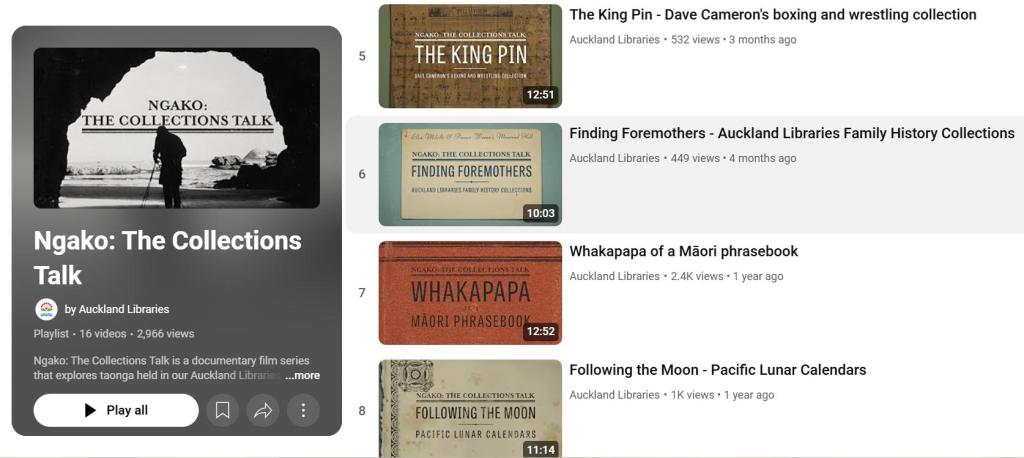
Day two opened with Sue Berman (Oral History & Sound Heritage expert) and Filmmaker Benjamin Brooking guiding us through the creation of Ngako. The documentary film series daylights intriguing and unexpected taonga housed deep in the basements of Tāmaki Pātaka Kōrero, the Auckland Central City Library. Though some were initially reluctant to be featured, each film includes one or more subject matter specialists sharing their knowledge (and at times, undisguised delight!) about the items showcased in the films.
Māori data sovereignty
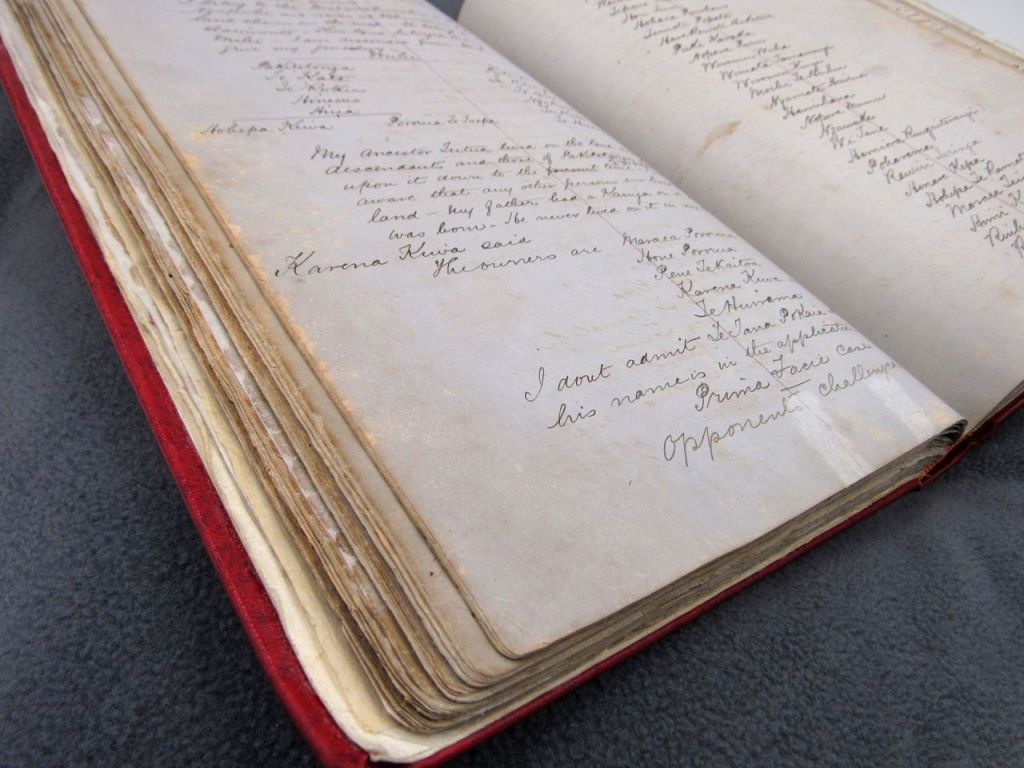
Questions around Māori data sovereignty i.e., data ownership and control in oral history work are being driven in part by increasing scrutiny from interviewees/research participants. How is privacy maintained? How long is data kept for? Nicholas Jones highlighted that data takes many, many forms: stories, rongoa, land court records, matauranga Māori, the census, health and genetic information… to name a few. He drew us back to pūraku, the three kete (baskets) of knowledge:
- kete-aronui all the knowledge that could help mankind
- kete-tuauri knowledge of ritual, memory and prayer
- kete-tuatea knowledge of evil or makutu, harmful to mankind
Combined, these kete embody the traditional means of transmitting knowledge. Strict protocols preserved the integrity of the information – to avoid dilution from being passed from person to person. He also raised caution around AI and cloud-based systems, noting where their servers are housed. For example, Otter AI the commonly used transcription software is based in the US, so the data are subject to American law. In this context, information storage and access require consideration – should a privacy breach occur, redress is difficult. Companies such as Otter AI are large… and very well-funded. He urged us to be more aware, reading software terms and conditions (or at least letting AI do that for us), and reminded us that no matter if data are deleted, there’s always a residual trail. Another question is who has the mana/ authority to make decisions on data sovereignty with so much sensitive information embedded in whanau, hapū, and iwi narratives.
Exploring grief and trauma without re-igniting it
Sue Gee and Deborah Shepherd interviewed Karekare residents a few months after Cyclone Gabrielle (Feb 2023), while Alison Wishart interviewed elderly men who had emigrated to Australia decades earlier from the UK to start new lives, some mentored through a “Big Brother” program. The approaches were necessarily different and sensitive to their contexts: for the former, oral history training and recording with residents in a tiny coastal community (pop. 320) still recovering from a natural disaster, and for the latter, 1-1 interviews. Some Karekare residents experienced PTSD; had their homes destroyed and were in limbo over insurance. Road closures still plagued the community. Alison was confronted by men grieving the loss of memory and knowing they were at the end of their lives. Reflecting on their interviews they shared their insights: Build trust by creating a safe and supportive environment. Make eye contact; listen and acknowledge the silence; carefully listen for changes in tone, observe body language. Be compassionate. While these points appear very simple, taking the time to reflect on practice and share experiences, questions and thoughts with others lies at the heart of excellent oral history practice.
Oral historians supporting oral historians
In managing the grief and difficult emotions presented by interviewees, how does the interviewer manage their own emotions? While general principles exist, relationships between the interviewer, interviewee and project commissioners are as varied as the projects themselves – the presentations throughout the conference were ample proof of that. While Alison (see above) could access support through the commissioning organisation, independent oral historians need guidance from other oral historians when navigating the complex terrain of ethics and emotions. While the NOHANZ website houses many useful guidelines and templates, the enormous amount of experience held by attendees and presenters at the conference was striking. Being in a room of perceptive oral historians highlighted the many opportunities for continued learning. Among the 70 or so attendees and presenters, it’s clear that much mentoring happens, with oral historians being soundboards, supporters, and simply friendly ears for their peers and inspired novices… like myself.
A handful of the many resources mentioned:
Bornat, J. (2001). Reminiscence and oral history: parallel universes or shared endeavour? 1. Ageing & Society, 21(2), 219-241. https://oro.open.ac.uk/2825/1/download.pdf
Puawai o te Kakano: The blossoming seed: The shared vision of Te Awhina Mai Tatou Katoa and For the Love of Bees to establish a place in the city for sharing Rongoā knowledge.
Mahuika, N. (2019). Rethinking oral history and tradition: An Indigenous perspective. Oxford University Press, USA.
Aanchal Malhotra: Museum of Material Memory: A crowdsourced digital repository of material culture of the Indian subcontinent, tracing family history and social ethnography through heirlooms, collectibles and objects of antiquity
Ngako: The Collections Talk: a documentary film and podcast series that explores taonga held in our Auckland Council Libraries Heritage Collections
 monicalogues